
Development and validation of an application for oxygen therapy management in adults
DOI:
https://doi.org/10.59681/2175-4411.v18.2026.1708Keywords:
Oxygen therapy, Mobile applications, Validation StudyAbstract
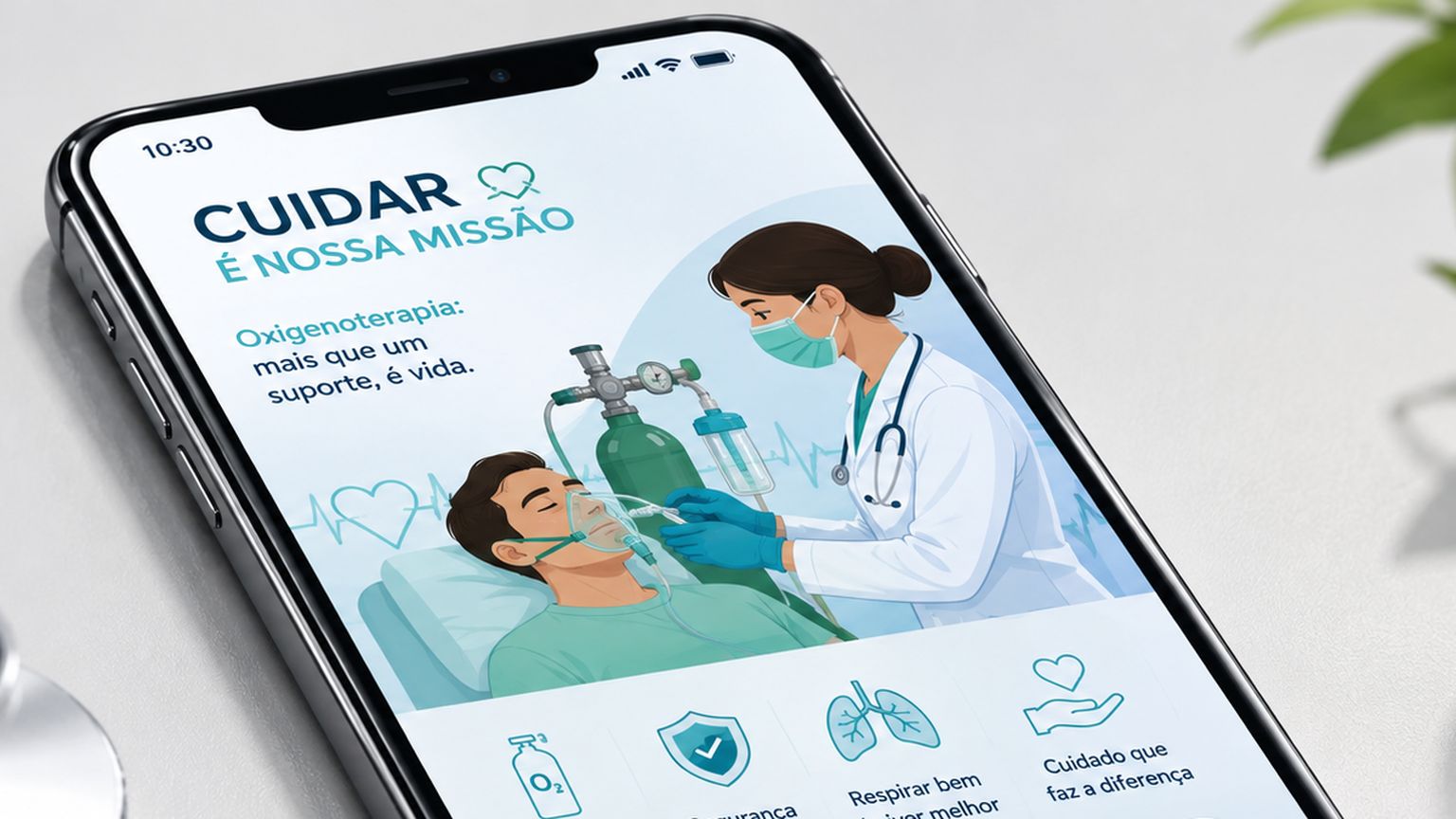
Objective: To develop and validate a mobile application to support the clinical practice of oxygen therapy in adults in healthcare services. Method: A methodological study with a participatory approach, in the form of technological production, developed in four phases: Phase 1, expert panel; Phase 2, healthcare professionals’ perceptions of oxygen therapy; Phase 3, application development; and Phase 4, application validation. Data were collected between July 2023 and February 2024, and between March and May 2026, at a University Hospital. Results: The perceptions of experts and the opinions of healthcare professionals regarding the difficulties experienced in oxygen therapy practice were assessed, and suggestions for resources to be incorporated into the application were obtained. The application was developed with 15 functionalities and subsequently submitted to validation, resulting in the inclusion of 6 additional functionalities. Conclusion: The process enabled the development and validation of the content and usability of a mobile application with the potential to provide support for the management of oxygen therapy in adults.
Downloads
References
1. Brasil. Ministério da Saúde. Agência Nacional de Vigilância Sanitária. Resolução RDC nº 70, de 1º de outubro de 2008. Dispõe sobre a notificação de Gases Medicinais. Diário Oficial da União, Brasília (DF); 2008 Out 2; Seção 1:49.
2. Gunathilake R, Lowe D, Wills J, Knight A, Braude P. Implementation of a multicomponent intervention to optimise patient safety through improved oxygen prescription in a rural hospital. Aust J Rural Health. 2014;22(6):328-33. doi: https://doi.org/10.1111/ajr.12115
3. Joean O, Klooster MPVT, Kayser MZ, Valtin C, Ewen R, Golpon H, et al. [A cross-sectional study in three German hospitals regarding oxygen therapy characteristics]. Pneumologie. 2022;76(10):697-704. doi: https://doi.org/10.1055/a-1916-1505
4. O’Driscoll BR. British Thoracic Society Oxygen Guidelines: another clinical brick in the wall. Thorax. 2017;72(6):498-9. doi: https://doi.org/10.1136/thoraxjnl-2017-209951
5. Norman DA, Draper SW. User centered system design: new perspectives on human-computer interaction. New Jersey: Lawrence Erlbaum Associates; 1986.
6. Pinheiro J de Q, Farias TM, Abe-Lima JY. Painel de Especialistas e Estratégia Multimétodos: Reflexões, Exemplos, Perspectivas. Psico [Internet]. 19º de julho de 2013 [citado em: 9 nov. 2026];44(2). Disponível em: https://revistaseletronicas.pucrs.br/revistapsico/article/view/11216
7. Tong A, Sainsbury P, Craig J. Consolidated criteria for reporting qualitative research (COREQ): a 32-item checklist for interviews and focus groups. Int J Qual Health Care. 2007;19(6):349-57. doi: https://doi.org/10.1093/intqhc/mzm042
8. Cunha CM, Almeida Neto OP, Stackfleth R. Principais métodos de avaliação psicométrica da validade de instrumentos de medida. Rev Aten Saude. 2016;14(47):75-83. doi: https://doi.org/10.13037/ras.vol14n47.3391
9. Soad GW. Avaliação de qualidade em aplicativos educacionais móveis [dissertação]. São Carlos: Instituto de Ciências Matemáticas e de Computação, Universidade de São Paulo; 2017. doi: https://doi.org/10.11606/d.55.2017.tde-27092017-173643
10. Brooke J. SUS: a "quick and dirty" usability scale. In: Jordan PW, Thomas B, McClelland IL, Weerdmeester B, editores. Usability evaluation in industry. London: Taylor & Francis; 1996. p. 189-94. doi: https://doi.org/10.1201/9781498710411-35
11. Alexandre NMC, Coluci MZO. Validade de conteúdo nos processos de construção e adaptação de instrumentos de medidas. Cien Saude Colet. 2011;16(7):3061-8. doi: https://doi.org/10.1590/s1413-81232011000800006
12. Bateman NT, Leach RM. Acute oxygen therapy. BMJ. 1998;317(7161):798-801. doi: https://doi.org/10.1136/bmj.317.7161.798
13. ARDS Definition Task Force, Ranieri VM, Rubenfeld GD, Thompson BT, Ferguson ND, Caldwell E, et al. Acute respiratory distress syndrome: the Berlin Definition. JAMA. 2012;307(23):2526-33. doi: https://doi.org/10.1001/jama.2012.5669
14. Rice TW, Wheeler AP, Bernard GR, Hayden DL, Schoenfeld DA, Ware LB. Comparison of the SpO2/FiO2 ratio and the PaO2/FiO2 ratio in patients with acute lung injury or ARDS. Chest. 2007;132(2):410-7. doi: https://doi.org/10.1378/chest.07-0617
15. Rodríguez-Villar S, Do Vale BM, Fletcher HM. The arterial blood gas algorithm: proposal of a systematic approach to analysis of acid-base disorders. Rev Esp Anestesiol Reanim (Engl Ed). 2020;67(1):20–34. doi: 10.1016/j.redar.2019.04.001
16. Wilkins RL, Stoller JK, Kacmarek RM, editors. Egan’s fundamentals of respiratory care. 9th ed. St. Louis: Mosby Elsevier; 2009.
17. Hospital Universitário da Universidade Federal de Sergipe. Guia farmacoterapêutico do HU-UFS: protocolo de oxigenoterapia em pacientes adultos hospitalizados. Aracaju: Empresa Brasileira de Serviços Hospitalares; 2024. p. 103.
18. Duan J, Han X, Bai L, Zhou L, Huang S. Assessment of heart rate, acidosis, consciousness, oxygenation, and respiratory rate to predict noninvasive ventilation failure in hypoxemic patients. Intensive Care Med. 2017;43(2):192-9. doi: https://doi.org/10.1007/s00134-016-4601-3
19. Gouveia TS, Trevisan IB, Santos CP, Silva BSA, Ramos EMC, Proença M, et al. Smoking history: relationships with inflammatory markers, metabolic markers, body composition, muscle strength, and cardiopulmonary capacity in current smokers. J Bras Pneumol. 2020;46(5):e20180353. doi: https://doi.org/10.36416/1806-3756/e20180353
20. Costa D, Gonçalves HA, Lima LP, Ike D, Cancelliero KM, Montebelo MIL. New reference values for maximal respiratory pressures in the Brazilian population. J Bras Pneumol. 2010;36(3):306-12. doi: https://doi.org/10.1590/S1806-37132010000300007
21. Cavalcante APC, Bajluk AC, Feitosa S. Autonomia e estimativa de consumo de oxigênio durante o transporte aeromédico: sugestão de um cálculo seguro e de fácil aplicação. In: 3º Congresso Aeromédico Brasileiro; 2022 nov 17-19; São Paulo, Brasil. 2022.
22. Britto RR, Probst VS, Andrade AFD, Samora GAR, Hernandes NA, Marinho PEM, et al. Reference equations for the six-minute walk distance based on a Brazilian multicenter study. Braz J Phys Ther. 2013;17(6):556-63. doi: https://doi.org/10.1590/s1413-35552012005000122
23. Associação de Medicina Intensiva Brasileira; Sociedade Brasileira de Pneumologia e Tisiologia. Recomendações brasileiras de ventilação mecânica 2013. Parte I. Rev Bras Ter Intensiva. 2014;26(2):89–121. doi: 10.5935/0103-507X.20140017
24. Palmeira AC, Araújo RC, Escossio AL, Sarinho SW, Rizzo JA, Andrade FMD, et al. Proposta de utilização da técnica de contagem como preditor da capacidade vital lenta em indivíduos hospitalizados. Rev CEFAC. 2015;17(2):559-65. doi: https://doi.org/10.1590/1982-0216201510614
25. Sarmento GJV, editor. Fisioterapia respiratória no paciente crítico: rotinas clínicas. 4. ed. Barueri: Manole; 2016.
26. Motta DS, Cavalcante RB, Dutra HS, Coelho ACO, Pacheco ZML, Santos KB, et al. Desenvolvimento e validação de tecnologia para ensino de suporte básico de vida na parada cardiorrespiratória. Cogitare Enferm. 2022;27:e84170. doi: https://doi.org/10.5380/ce.v27i0.84170
27. Correia GS, Silva ACSS, Pinto LF, Góes FGB, Goulart MCEL, Pereira-Ávila FMV. Usability of the ROBOVID mobile app for health education about COVID-19. Rev Lat Am Enfermagem. 2024;32:e4191. doi: https://doi.org/10.1590/1518-8345.6924.4191
28. Naranjo-Rojas A, Perula-de Torres LÁ, Cruz-Mosquera FE, Molina-Recio G. Usability of a mobile application for the clinical follow-up of patients with chronic obstructive pulmonary disease and home oxygen therapy. Int J Med Inform. 2023;175:105089. doi: https://doi.org/10.1016/j.ijmedinf.2023.105089
29. Sousa LB, Sousa IM, Costa EC, Freitas APF, Santos LVF, Ferreira AGN. IST Nurse®: elaboração e evidências de validade de aplicativo móvel como subsídio ao manejo clínico de Infecções Sexualmente Transmissíveis. Rev Lat Am Enfermagem. 2024;32:e4318. doi: https://doi.org/10.1590/1518-8345.7207.4318
30. Campos Filho AS, Vasconcelos Cursino JR, do Nascimento JWA, de Souza RR, da Silva Lima Roque G, de Souza Cavalcanti AR. Content and usability validation of an intelligent virtual conversation assistant used for virtual triage during the COVID-19 pandemic in Brazil. Comput Inform Nurs. 2022;40(11):779-85. doi: https://doi.org/10.1097/cin.0000000000000884
Published
How to Cite
Issue
Section
License
Copyright (c) 2026 Eliene Fonseca Lima Almeida, Fábio Ramalho Amorim, Ana Verena Alves Calmon Almeida, Vanessa Frederico Barbosa, Beatriz Oliveira Santana, Grace Anne Azevedo Dória

This work is licensed under a Creative Commons Attribution 4.0 International License.














