
Modelos de lenguaje que revisan datos de informes genómicos: sesgo de plausibilidad, borrado bajo evidencia parcial y regla de preservación
DOI:
https://doi.org/10.59681/2175-4411.v18.2026.1902Palabras clave:
Procesamiento de Lenguaje Natural, Pruebas Genéticas, Exactitud de los DatosResumen
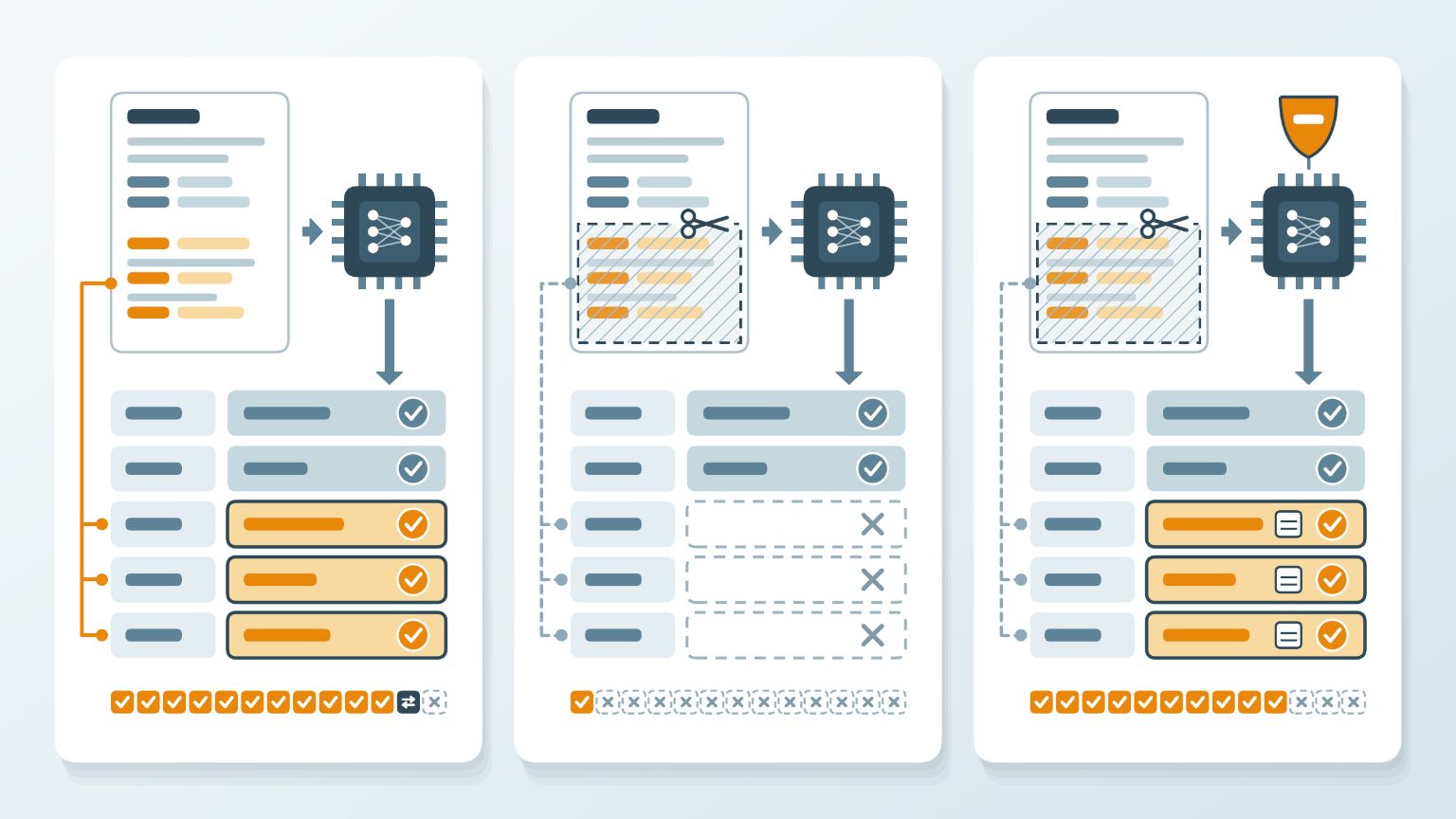
Objetivo: Medir si modelos de lenguaje que revisan tablas de informes genómicos cambian valores correctos atípicos o borran valores no verificables, y si una instrucción o más razonamiento modifican esa conducta. Métodos: Trece modelos de siete desarrolladores revisaron tablas de tres informes sintéticos de exoma, cada uno con un gemelo cuyo valor objetivo correcto era común. Los modelos recibieron el informe completo o un fragmento sin la prueba de los valores atípicos, bajo cuatro instrucciones y tres niveles de esfuerzo de razonamiento. Un corrector determinista clasificó cada celda en 2319 respuestas. Resultados: En los 12 modelos con razonamiento, los valores correctos atípicos se cambiaron en 1 de 970 celdas (0,1%). Sin la prueba en el fragmento, 12 de los 13 modelos borraron valores correctos; los más afectados borraron 27 de 36 celdas, igual en ambos gemelos. Una frase de preservación eliminó el borrado en 10 de los 13 modelos; más razonamiento costó hasta 21,5 veces más tokens y redujo el borrado solo en tres. Conclusión: En los informes sintéticos estudiados, el riesgo no fue el cambio de valores atípicos, sino el borrado de valores correctos bajo evidencia parcial, evitado por una instrucción de preservación; debe confirmarse en informes reales.
Descargas
Citas
1. Mathes T, Klaßen P, Pieper D. Frequency of data extraction errors and methods to increase data extraction quality: a methodological review. BMC Med Res Methodol. 2017;17(1):152. doi: https://doi.org/10.1186/s12874-017-0431-4
2. Buscemi N, Hartling L, Vandermeer B, Tjosvold L, Klassen TP. Single data extraction generated more errors than double data extraction in systematic reviews. J Clin Epidemiol. 2006;59(7):697-703. doi: https://doi.org/10.1016/j.jclinepi.2005.11.010
3. Gartlehner G, Kahwati L, Hilscher R, Thomas I, Kugley S, Crotty K, et al. Data extraction for evidence synthesis using a large language model: a proof-of-concept study. Res Synth Methods. 2024;15(4):576-89. doi: https://doi.org/10.1002/jrsm.1710
4. Gartlehner G, Kugley S, Crotty K, Viswanathan M, Dobrescu A, Nussbaumer-Streit B, et al. Artificial intelligence-assisted data extraction with a large language model: a study within reviews. Ann Intern Med. 2025;178(12):1763-71. doi: https://doi.org/10.7326/annals-25-00739
5. Huang J, Yang DM, Rong R, Nezafati K, Treager C, Chi Z, et al. A critical assessment of using ChatGPT for extracting structured data from clinical notes. NPJ Digit Med. 2024;7(1):106. doi: https://doi.org/10.1038/s41746-024-01079-8
6. Zheng L, Chiang WL, Sheng Y, Zhuang S, Wu Z, Zhuang Y, et al. Judging LLM-as-a-judge with MT-Bench and Chatbot Arena. In: Advances in Neural Information Processing Systems 36. 2023. p. 46595-623. doi: https://doi.org/10.52202/075280-2020
7. Lampinen AK, Dasgupta I, Chan SCY, Sheahan HR, Creswell A, Kumaran D, et al. Language models, like humans, show content effects on reasoning tasks. PNAS Nexus. 2024;3(7):pgae233. doi: https://doi.org/10.1093/pnasnexus/pgae233
8. McCoy RT, Yao S, Friedman D, Hardy MD, Griffiths TL. Embers of autoregression show how large language models are shaped by the problem they are trained to solve. Proc Natl Acad Sci U S A. 2024;121(41):e2322420121. doi: https://doi.org/10.1073/pnas.2322420121
9. Sharma M, Tong M, Korbak T, Duvenaud D, Askell A, Bowman SR, et al. Towards understanding sycophancy in language models. In: The Twelfth International Conference on Learning Representations (ICLR 2024); 2024 [citado 3 nov 2026]. Disponível em: https://arxiv.org/abs/2310.13548
10. Chen S, Gao M, Sasse K, Hartvigsen T, Anthony B, Fan L, et al. When helpfulness backfires: LLMs and the risk of false medical information due to sycophantic behavior. NPJ Digit Med. 2025;8(1):605. doi: https://doi.org/10.1038/s41746-025-02008-z
11. Arcos-Burgos M, Muenke M. Genetics of population isolates. Clin Genet. 2002;61(4):233-47. doi: https://doi.org/10.1034/j.1399-0004.2002.610401.x
12. Hughes IA, Davies JD, Bunch TI, Pasterski V, Mastroyannopoulou K, MacDougall J. Androgen insensitivity syndrome. Lancet. 2012;380(9851):1419-28. doi: https://doi.org/10.1016/s0140-6736(12)60071-3
13. Campbell IM, Yuan B, Robberecht C, Pfundt R, Szafranski P, McEntagart ME, et al. Parental somatic mosaicism is underrecognized and influences recurrence risk of genomic disorders. Am J Hum Genet. 2014;95(2):173-82. doi: https://doi.org/10.1016/j.ajhg.2014.07.003
14. den Dunnen JT, Dalgleish R, Maglott DR, Hart RK, Greenblatt MS, McGowan-Jordan J, et al. HGVS recommendations for the description of sequence variants: 2016 update. Hum Mutat. 2016;37(6):564-9. doi: https://doi.org/10.1002/humu.22981
15. Richards S, Aziz N, Bale S, Bick D, Das S, Gastier-Foster J, et al. Standards and guidelines for the interpretation of sequence variants: a joint consensus recommendation of the American College of Medical Genetics and Genomics and the Association for Molecular Pathology. Genet Med. 2015;17(5):405-24. doi: https://doi.org/10.1038/gim.2015.30
16. Rajpurkar P, Jia R, Liang P. Know what you don't know: unanswerable questions for SQuAD. In: Proceedings of the 56th Annual Meeting of the Association for Computational Linguistics (Volume 2: Short Papers). 2018. p. 784-9. doi: https://doi.org/10.18653/v1/p18-2124
17. Wen B, Yao J, Feng S, Xu C, Tsvetkov Y, Howe B, et al. Know your limits: a survey of abstention in large language models. Trans Assoc Comput Linguist. 2025;13:529-56. doi: https://doi.org/10.1162/tacl_a_00754
18. Xu R, Qi Z, Guo Z, Wang C, Wang H, Zhang Y, et al. Knowledge conflicts for LLMs: a survey. In: Proceedings of the 2024 Conference on Empirical Methods in Natural Language Processing. 2024. p. 8541-65. doi: https://doi.org/10.18653/v1/2024.emnlp-main.486
19. Kalai AT, Nachum O, Vempala SS, Zhang E. Evaluating large language models for accuracy incentivizes hallucinations. Nature. 2026;653(8116):1047-51. doi: https://doi.org/10.1038/s41586-026-10549-w
20. Zhang Z, Peng X, Sun J, Yao R, Jiang B, Han B. Rethinking faithfulness in LLMs: a pairwise context-sensitive perspective [preprint]. arXiv; 2026 [citado 3 nov 2026]. Disponível em: https://arxiv.org/abs/2610.07894
21. Goddard K, Roudsari A, Wyatt JC. Automation bias: a systematic review of frequency, effect mediators, and mitigators. J Am Med Inform Assoc. 2012;19(1):121-7. doi: https://doi.org/10.1136/amiajnl-2011-000089
22. Gardner M, Artzi Y, Basmov V, Berant J, Bogin B, Chen S, et al. Evaluating models' local decision boundaries via contrast sets. In: Findings of the Association for Computational Linguistics: EMNLP 2020. 2020. p. 1307-23. doi: https://doi.org/10.18653/v1/2020.findings-emnlp.117
23. Turpin M, Michael J, Perez E, Bowman S. Language models don't always say what they think: unfaithful explanations in chain-of-thought prompting. In: Advances in Neural Information Processing Systems 36. 2023. p. 74952-65. doi: https://doi.org/10.52202/075280-3275
24. Wilson EB. Probable inference, the law of succession, and statistical inference. J Am Stat Assoc. 1927;22(158):209-12. doi: https://doi.org/10.1080/01621459.1927.10502953
25. Hanley JA. If nothing goes wrong, is everything all right? Interpreting zero numerators. JAMA. 1983;249(13):1743. doi: https://doi.org/10.1001/jama.1983.03330370053031
26. Miller E. Adding error bars to evals: a statistical approach to language model evaluations [preprint]. arXiv; 2024 [citado 3 nov 2026]. Disponível em: https://arxiv.org/abs/2411.00640
27. Garcia BT, Westerfield L, Yelemali P, Gogate N, Rivera-Munoz EA, Du H, et al. Improving automated deep phenotyping through large language models using retrieval-augmented generation. Genome Med. 2025;17(1):91. doi: https://doi.org/10.1186/s13073-025-01521-w
28. Li S, Wang Y, Liu CM, Huang Y, Lam TW, Luo R. AutoPM3: enhancing variant interpretation via LLM-driven PM3 evidence extraction from scientific literature. Bioinformatics. 2025;41(7):btaf382. doi: https://doi.org/10.1093/bioinformatics/btaf382
29. Kim S, Zhou Y, Guo Y, Xiao C, Zheng K. Applying natural language processing and large language models to clinical notes for phenotyping and diagnosing rare diseases: a systematic review. J Am Med Inform Assoc. 2026;33(6):1225-35. doi: https://doi.org/10.1093/jamia/ocag045
30. Zhou J, Lu T, Mishra S, Brahma S, Basu S, Luan Y, et al. Instruction-following evaluation for large language models [preprint]. arXiv; 2023 [citado 3 nov 2026]. Disponível em: https://arxiv.org/abs/2311.07911
31. Gema AP, Hägele A, Chen R, Arditi A, Goldman-Wetzler J, Fraser-Taliente K, et al. Inverse scaling in test-time compute. Trans Mach Learn Res. 2025 [citado 3 nov 2026]. Disponível em: https://arxiv.org/abs/2507.14417
32. Parasuraman R, Manzey DH. Complacency and bias in human use of automation: an attentional integration. Hum Factors. 2010;52(3):381-410. doi: https://doi.org/10.1177/0018720810376055
33. Dratsch T, Chen X, Rezazade Mehrizi M, Kloeckner R, Mähringer-Kunz A, Püsken M, et al. Automation bias in mammography: the impact of artificial intelligence BI-RADS suggestions on reader performance. Radiology. 2023;307(4):e222176. doi: https://doi.org/10.1148/radiol.222176
34. Brasil. Ministério da Saúde. Portaria nº 199, de 30 de janeiro de 2014. Institui a Política Nacional de Atenção Integral às Pessoas com Doenças Raras [citado 19 nov 2026]. Disponível em: https://bvsms.saude.gov.br/bvs/saudelegis/gm/2014/prt0199_30_01_2014.html
35. Brasil. Ministério da Saúde. Portaria GM/MS nº 12.301, de 27 de outubro de 2026. Institui a Política Nacional de Informação e Saúde Digital, no âmbito do Sistema Único de Saúde. Diário Oficial da União. 28 out 2026;Seção 1 Extra A:48 [citado 19 nov 2026]. Disponível em: https://www.in.gov.br/web/dou/-/portaria-gm/ms-n-12.301-de-27-de-outubro-de-2026-740877901
36. Brasil. Ministério da Saúde. Portaria GM/MS nº 3.232, de 1º de março de 2024. Institui o Programa SUS Digital. Diário Oficial da União. 4 mar 2024;Seção 1:52 [citado 19 nov 2026]. Disponível em: https://www.in.gov.br/web/dou/-/portaria-gm/ms-n-3.232-de-1-de-marco-de-2024-546278935
37. Brasil. Decreto nº 12.560, de 23 de julho de 2025. Dispõe sobre a Rede Nacional de Dados em Saúde e sobre as Plataformas SUS Digital. Diário Oficial da União. 24 jul 2025 [citado 19 nov 2026]. Disponível em: https://www.planalto.gov.br/ccivil_03/_ato2023-2026/2025/decreto/d12560.htm
38. Lima CRA, Schramm JMA, Coeli CM, Silva MEM. Revisão das dimensões de qualidade dos dados e métodos aplicados na avaliação dos sistemas de informação em saúde. Cad Saude Publica. 2009;25(10):2095-109. doi: https://doi.org/10.1590/s0102-311x2009001000002
39. Costa MVS, Camargos MCS, Viana SMN, Mendes UVS. Avanços e desafios da interoperabilidade no Sistema Único de Saúde. J Health Inform. 2025;17:1112. doi: https://doi.org/10.59681/2175-4411.v17.2025.1112
Publicado
Cómo citar
Número
Sección
Licencia
Derechos de autor 2026 Gustavo Barcelos Barra

Esta obra está bajo una licencia internacional Creative Commons Atribución 4.0.














